
Provenance & Authentication
In the world of historical artifacts, provenance is everything. Understanding the documented history of an object is the foundation of informed collecting, sound investment, and genuine historical preservation.
Why Provenance Matters
Every significant artifact carries two histories: the history it witnessed, and the history of its ownership. The second history — its provenance — is what separates a museum-quality piece from a curiosity of uncertain origin.
A well-documented provenance establishes that an object is genuine, that it was legally acquired, and that its attribution to a person, event, or era is supported by evidence rather than speculation. For collectors, provenance protects both the financial investment and the historical integrity of a collection. For museums, it is a non-negotiable requirement before any acquisition can proceed.
Over 50+ years of experience have taught Gary Hendershott that the single greatest determinant of an artifact's lasting value is the strength of its provenance. Items with unbroken chains of documented ownership consistently appreciate, while pieces with gaps or questionable histories carry risk that compounds over time.
Authentication & Evaluation
Authenticating a historical artifact is both a science and an art, requiring the convergence of physical examination, documentary research, and deep contextual knowledge. Gary's authentication process has been refined over decades and follows a rigorous methodology.
Physical Examination
Every evaluation begins with a hands-on inspection of the object itself. Materials, construction methods, tool marks, wear patterns, patina, and aging characteristics are assessed against known period examples. Anomalies are noted and investigated.
Documentary Research
The object's history is traced through available records: prior sales documentation, exhibition histories, publication references, photographic evidence, family correspondence, and institutional records. Each link in the chain of ownership is verified where possible.
Contextual Analysis
The artifact is evaluated within its historical context. Does the piece conform to what is known about the period, the maker, or the attributed owner? Are there comparable examples in museum collections or published references? This step draws on decades of firsthand experience and a vast knowledge of surviving examples.
Expert Consultation
When the assessment warrants it, outside specialists in metallurgy, textile analysis, ink dating, paper composition, or related disciplines are engaged to provide independent scientific verification.
Fakes and Scoundrels
Gary Hendershott's published reference work, Fakes and Scoundrels, is the definitive guide to identifying forgeries and avoiding the pitfalls that plague every area of historical collecting. The book covers firearms, swords, paintings, autographs, coins, militaria, and more.
Written with the candor and authority that only decades of firsthand experience can provide, the book is essential reading for collectors, dealers, museum curators, and anyone who values the integrity of historical objects. It names names, describes specific forgery techniques, and provides the knowledge needed to protect yourself and your collection.
Learn More About the Book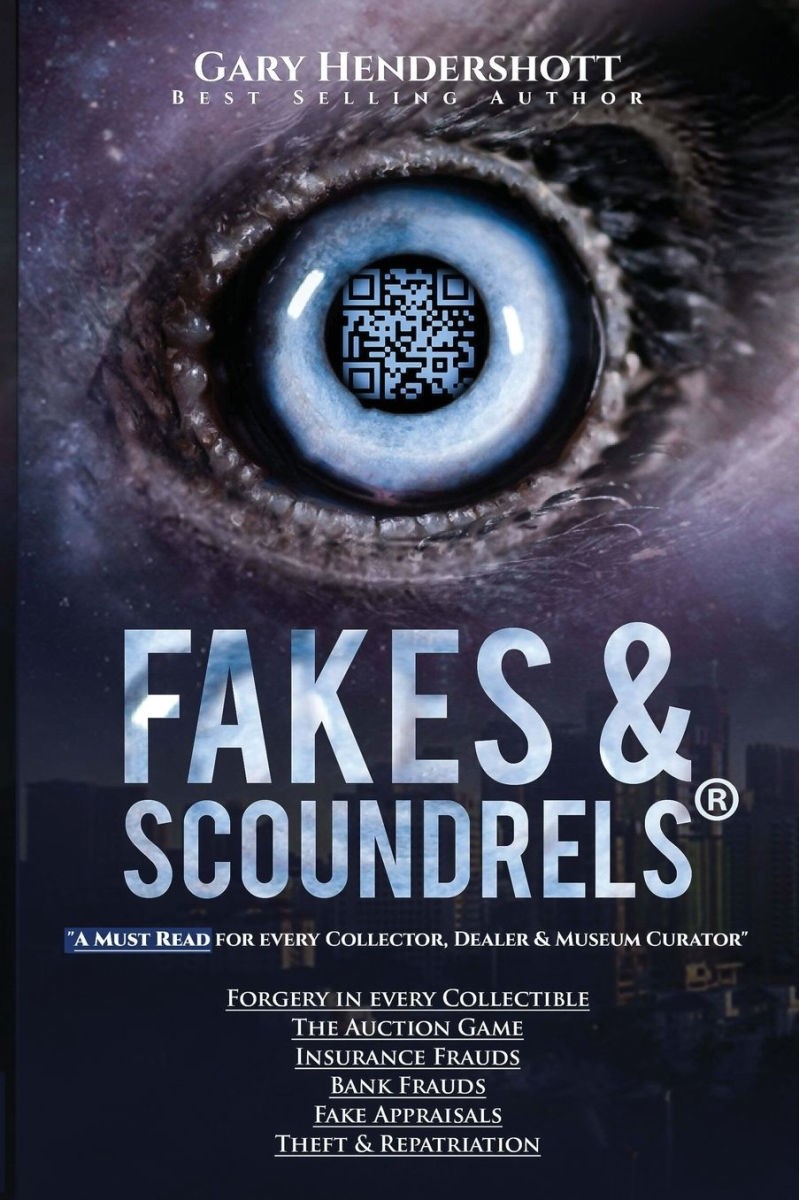
Frequently Asked Questions
What is provenance and why does it matter?
Provenance is the documented history of ownership and custody of an artifact from its origin to the present day. It matters because it establishes authenticity, legal title, and historical significance. An item with strong provenance is worth substantially more than an identical piece without documentation, because the chain of ownership confirms that the object is genuine and ties it to the people and events that give it meaning.
How does Gary Hendershott authenticate artifacts?
Authentication draws on over 50+ years of hands-on experience examining tens of thousands of artifacts. The process combines physical inspection of materials, construction methods, and aging characteristics with research into documentary evidence, photographic records, and prior publication history. When warranted, outside specialists in metallurgy, paper analysis, or ink dating are consulted. The goal is always to establish the truth about an object, whether that confirms or denies its attribution.
Can you appraise items for insurance or estate purposes?
Yes. Gary provides written appraisals and evaluations for insurance coverage, estate planning, tax-related donations, and equitable distribution. Each appraisal includes a detailed description, provenance summary, condition assessment, and fair market valuation based on current market data and comparable sales. Appraisals are conducted with the rigor expected by institutions, estate attorneys, and the IRS.
How can I tell if a Civil War artifact is genuine?
Genuine Civil War artifacts exhibit period-correct materials, construction techniques, and wear patterns consistent with the era. Fakes often use modern materials, incorrect hardware, or artificial aging. The most reliable safeguard is to purchase from experienced, reputable dealers who guarantee authenticity, provide full provenance, and offer a return policy. Gary's book, Fakes and Scoundrels, provides extensive guidance on identifying forgeries across multiple collecting categories.
Questions About an Artifact?
If you have questions about the authenticity, provenance, or value of a historical artifact, Gary Hendershott offers expert evaluation grounded in decades of experience. All inquiries are handled with complete discretion.
Request an Evaluation